How to Choose a Floor Scrubber
Industrial‑site floor cleaning for factory workshops, logistics warehouses and other industrial premises has long been challenged by complex stains such as oil contamination, dust and debris. Traditional manual cleaning is low‑efficiency and fails to deliver thorough cleaning results. Industrial‑grade floor scrubbers, with their integrated mechanical brushing and sewage‑suction design, have become core equipment for boosting cleaning efficiency. Featuring coordinated high‑pressure brush disc and vacuum suction, they rapidly remove stubborn floor stains and recycle sewage simultaneously to prevent secondary pollution.
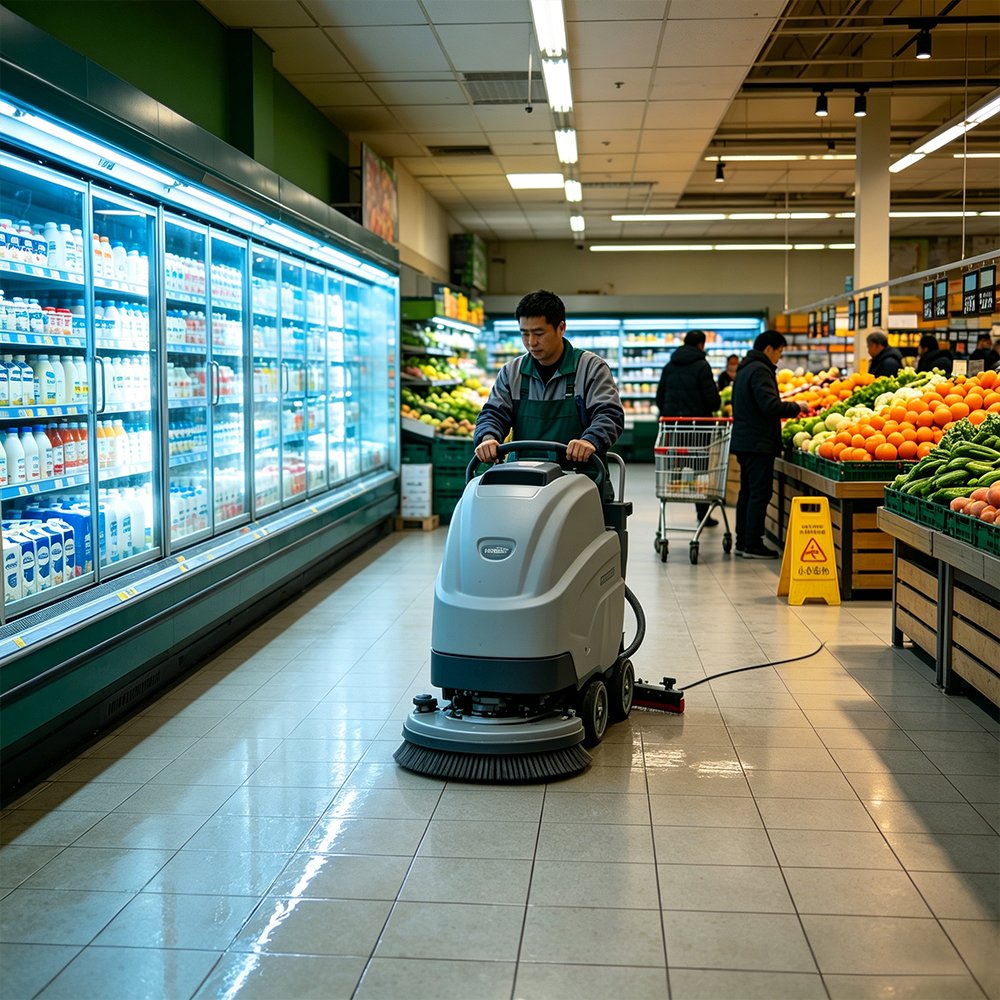
The cleaning workflow of an industrial floor scrubber consists of three phases: brushing, sewage suction and drying. During the brushing phase, a motor‑driven circular brush disc (commonly 520 mm in diameter) rotates at 180 RPM together with high‑pressure water flow (adjustable on selected models) to strip off floor contaminants via physical friction. In the sewage‑suction phase, a vacuum fan generates negative pressure to draw wastewater and residues into the waste‑water tank (capacity varies by model). The drying phase relies on natural evaporation of residual moisture or supplementary manual treatment.
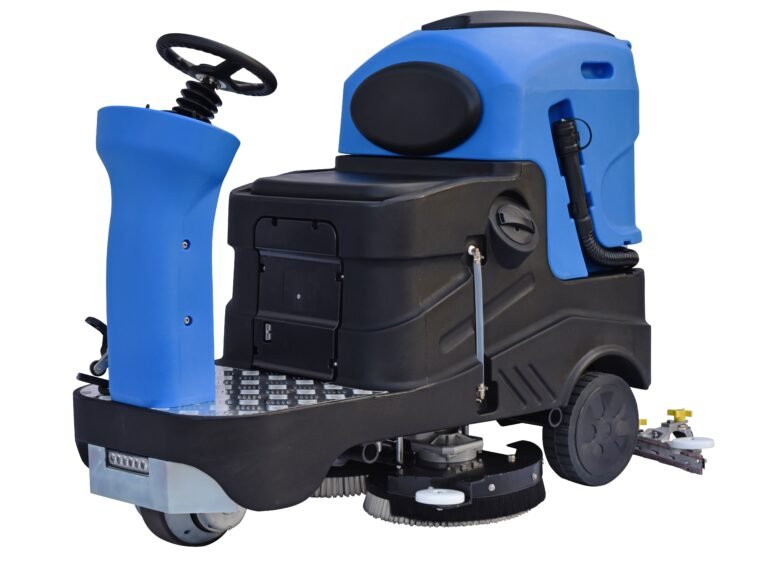
Key components include a 24 V battery‑powered system, 1050 W motor, heavy‑duty steel brush housing for enhanced durability, as well as corrosion‑resistant fresh‑water and waste‑water tanks.
2. Key Parameters & Performance
Technical parameters directly determine the performance of industrial floor scrubbers. Models delivering a cleaning capacity of 2,300 sq.m per hour can satisfy daily cleaning demands of medium‑sized factories. Weighing 132 kg, the walk‑behind design balances operational flexibility and ground‑contact pressure, preventing insufficient brush‑to‑floor contact caused by under‑weight equipment.
Battery‑powered operation eliminates cable restraints and supports long‑hour continuous cleaning over large areas. Proper matching between battery runtime and charging cycles is required. In addition, steel brush housings offer superior wear resistance versus plastic alternatives, ideal for sites with metal chips and sharp particles.
3. Application Scenarios & Operating Guidelines
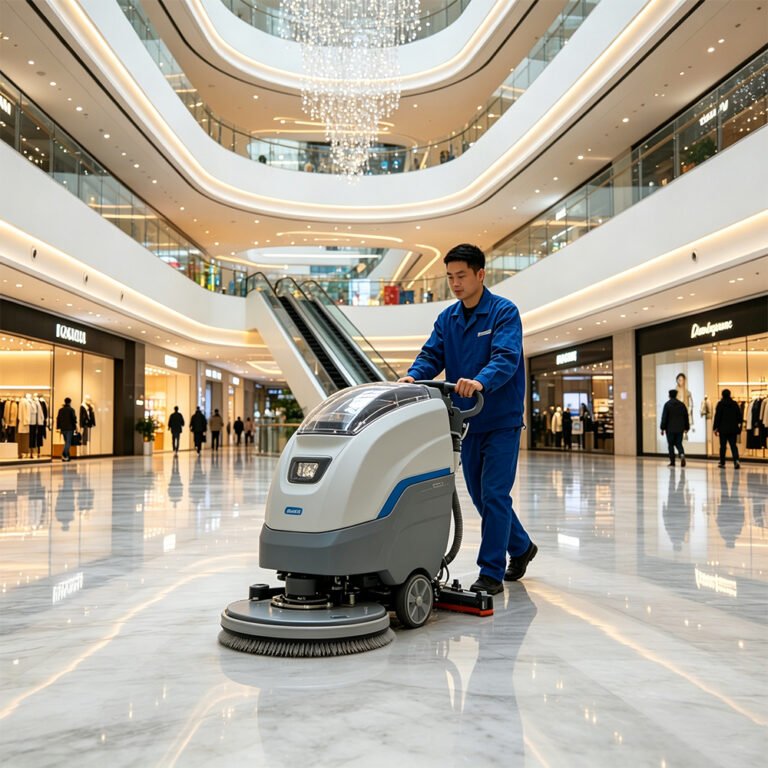
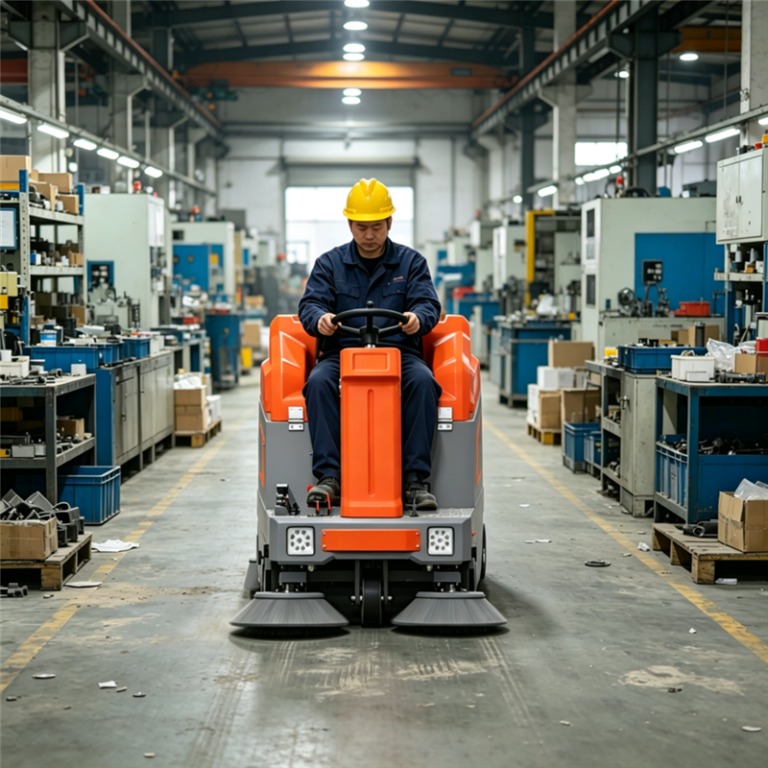
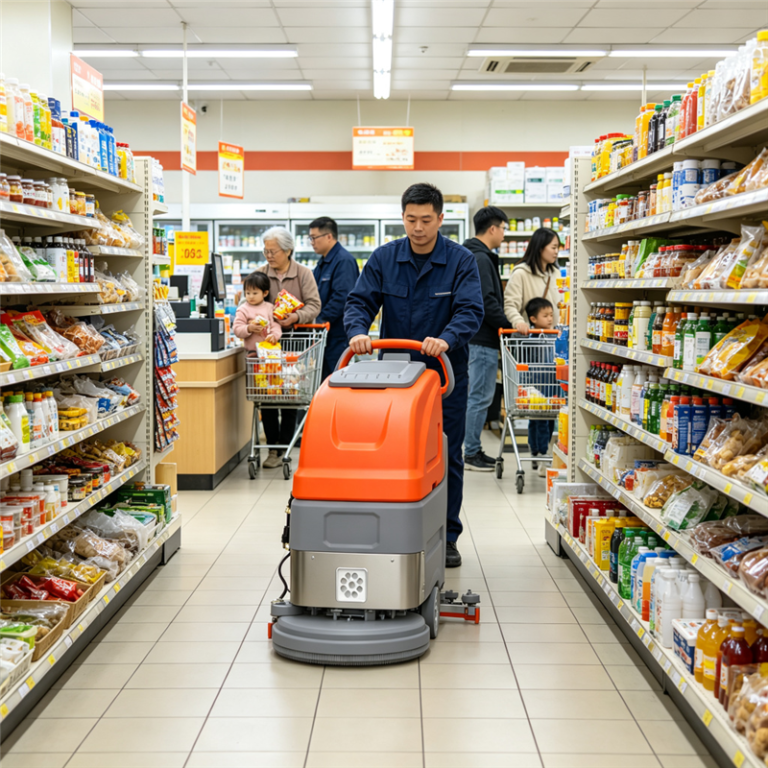
This equipment works on hard surfaces including concrete and epoxy floors. It is widely adopted in food‑processing plants, automobile manufacturing workshops, electronic factories and other facilities with high cleanliness requirements.
Important operation notes:
1. Adjust brush pressure according to floor material to avoid floor damage.
2. Regularly empty the waste‑water tank and clean filter screens to prevent blockages and suction loss.
3. Recharge the unit after use and inspect battery conditions; low‑temperature environments may reduce battery runtime.
Given the heavy unit weight, steer with swivel casters; do not drag the machine forcibly to avoid component damage.
4. Technical Advantages & Limitations
Compared with conventional cleaning solutions, industrial floor scrubbers greatly improve efficiency — one unit can replace 3‑5 manual cleaners — and deliver consistent cleaning quality free from human errors.
Nevertheless, certain limitations should be noted: cleaning performance drops on uneven floors; multiple units may be required for extra‑large‑size premises; upfront procurement cost is higher than ordinary cleaning tools. Routine consumable replacement is essential for stable performance: brush discs need replacement roughly every 500 working hours, and squeegee blades every 300 working hours. Overall maintenance cost remains lower than long‑term manual‑labor expenses.