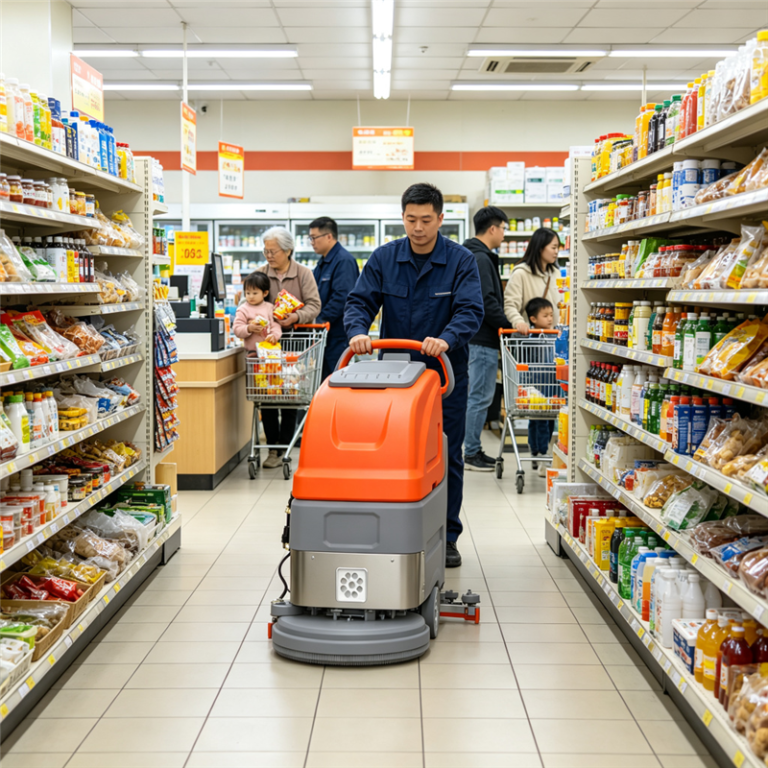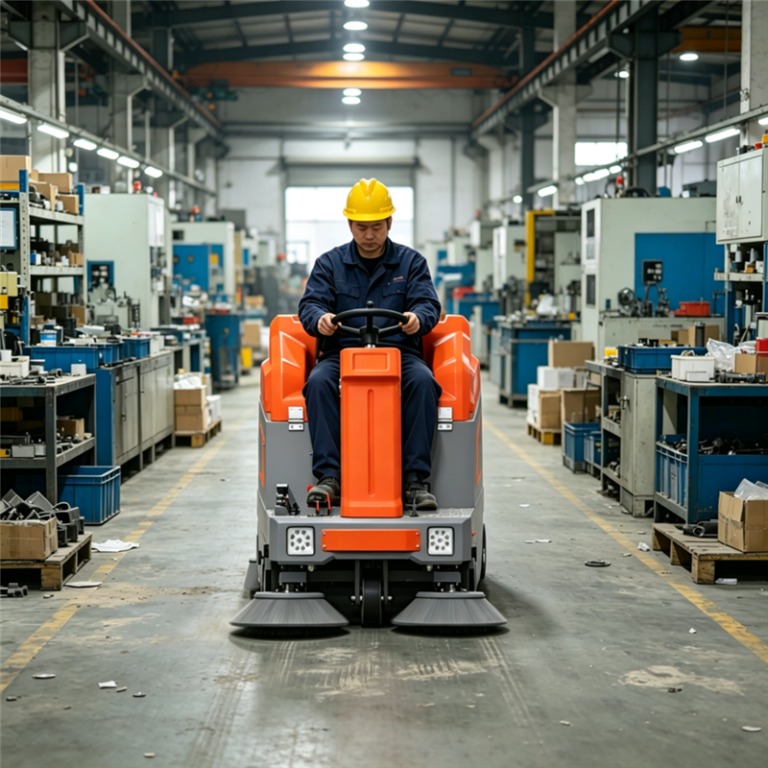
Industrial Floor Scrubber Daily Maintenance
The core of industrial floor scrubber maintenance lies in timely cleaning after each use, regular inspection of key components, and avoiding operation with faults. This ensures stable cleaning performance and extends the service life of the whole machine and motors.
I. Basic Daily Maintenance After Use
- Clean the recovery tank and solution tank After each operation, drain all wastewater from the recovery tank and rinse the tank interior thoroughly to prevent dirt buildup, bad odors and bacterial growth. The solution tank shall also be rinsed regularly to avoid impurities clogging the water circuit.
- Clean the squeegee blades and brush disc Squeegee blades are critical for proper floor drying. After use, check for debris such as sand, hair and metal shavings on the blades and wipe them clean. Remove tangled residues from the brush disc or pad driver to prevent reduced rotation speed and poor cleaning results.
- Wipe the machine exterior Wipe the machine body, control panel and under‑chassis area with a clean cloth. Prevent long‑term buildup of oil and dust, which will impair heat dissipation and appearance.
II. Battery Maintenance
- Recharge in a timely manner Recharge the unit promptly after use. Do not drain the battery completely before charging to maximize battery service life.
- Prevent over‑charging and deep discharging Both prolonged under‑charge status and continuous plug‑in after full charge will degrade battery performance.
- Inspect battery terminals Check for loose connections, oxidation or overheating. Address any abnormalities immediately.
III. Inspection of Key Components
- Check squeegee blade wear Adjust or replace heavily worn, deformed or damaged squeegee blades; otherwise the floor cannot be dried completely.
- Check brush disc wear Short or unevenly worn bristles will lower cleaning efficiency. Replace brushes as needed.
- Check for water circuit blockages Regularly inspect spray nozzles, filter screens and water hoses to avoid partial or complete loss of water output caused by clogging.
- Check screws and connecting parts Tighten loose screws and connections periodically, as fasteners may loosen after heavy‑duty operations.
IV. Operation Notes
Avoid prolonged overloaded operation. Remove large debris manually such as iron wires, ropes and plastic bags before scrubbing. For heavily oily floors, use suitable detergents. Do not rely solely on mechanical scrubbing, which will place excessive strain on the machine.
V. Scheduled Service Recommendations
Carry out a full inspection every week and an in‑depth maintenance every month. Inspect motors, squeegee blades, brush discs, batteries and water systems. Repair faults at the early stage to prevent minor issues from escalating into major breakdowns.